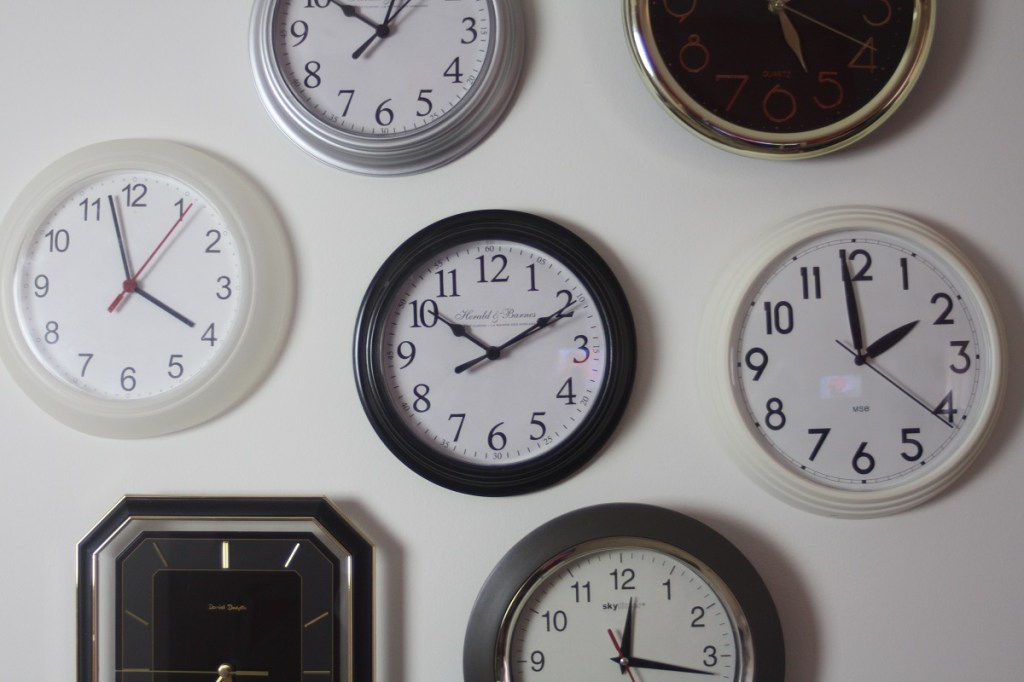

When it comes to “spring forward” and “fall back”, it’s not exactly my first rodeo, far from it. Over the span of sixty-one years, I’ve switched my clocks, as prescribed, and witnessed the varying effects of this practice.
As a teenager who was a bit of a night owl and who slept weird hours, I don’t remember being significantly impacted. During my career years, it was a bit of a coordination effort to get back on track, but within a day or two, my system would adjust. But now, as a retired senior, it’s a different story. It takes more like a week (or two) for my body to fully adjust.
You’d think it would be the opposite, given the freedom I have with my schedule and my routine. You’d think that the adjustment would be less of an issue. Unfortunately, for me, that’s not the case.
In the fall, it’s about managing my appetite when mealtimes happen an hour later. It’s also about resisting the urge to go to bed at a time more representative of what you might see in a seniors’ home.
In the spring, it’s about forcing myself to eat at earlier mealtimes and lying awake at bedtime when I don’t really feel sleepy.
Either way, after the time change, my sleep and wake-up times always seem to be out of sync, leaving me looking and feeling like a character out of a zombie movie. If I try calling upon caffeine to help regulate my system, unfortunately, it doesn’t always help. All it seems to do is speed up the mental gymnastics of constantly trying to figure out if 6:00 new time is 5:00 old time or is it 7:00 old time?
Add to the equation a cat who lives on structure and wonders why (in the fall) we’re still awake when we should be sleeping or (in the spring) why we’re heading to bed at a time when we should still be showing her some attention.
When all else fails, I may call upon an afternoon nap to help things along. But when the intention of a 15-minute nap turns into 60 minutes (because I’m just THAT tired), I just wave the white flag and try to go with the flow, hoping things eventually settle.
With the extreme discombobulation I feel twice per year, I envy frequent flyers who can rise above the repercussions of switching time zones. How do they do it? Is it possible to ever get used to it?
As different provinces and states contemplate (or even decide) to eliminate the time change and stick to standard or daylight saving time, my envy grows.
However, I wonder if the reason for my challenges is retirement itself. In the absence of a firm routine like I had when I was working for a living, perhaps I’m not forced to adjust as quickly. Could that be it?
Just the same, if we make a permanent change, as much as it isn’t a picnic to be in darkness in the early morning or in late afternoon, the reality is that I am game to make THAT adjustment, rather than flipping our clocks back and forth twice per year and spending days (or weeks) in recovery mode.
Did you enjoy this post? If you did, your likes and shares are most appreciated. If you haven’t already, please check out the rest of my blog at andrebegin.blog.
Sincere thanks for reading!
Have a great day,
André




Leave a Reply