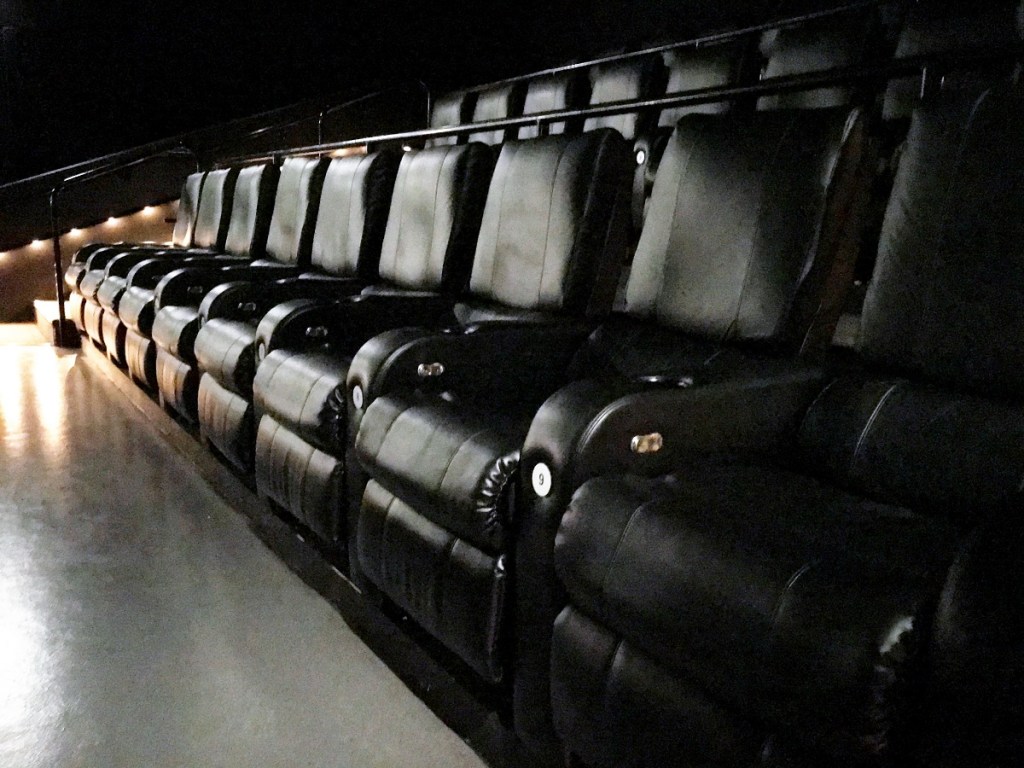

A few weeks ago, my partner and I ventured to the city to watch a movie that we had been interested in seeing for quite some time. Given our distance from the theatre, in leaving early to provide buffer time for any eventuality, we were there well before the show was set to begin, allowing us to enjoy the pre-show.
The pre-show was watching people trying to find their seats.
Perhaps it’s because my partner and I are huge fans of theater, movies, and concerts that maybe we see a disproportionate number of these situations, but have you ever noticed how in every crowd there’s always at least a few couples for whom finding their seats is a serious challenge?
Even before the lights go out, some couples find themselves yelling letters and numbers back and forth at each other like a bingo game gone haywire, turning into an interpretive dance involving many iterations of bending, stretching, squinting, contorting, checking the tickets, sitting, getting up… you get the idea.
Fortunately, there’s usually one person in each group who seems more self-assured in finding the correct seats and in ushering the rest of their friends to their respective places. But when that is not the case, out of an abundance of empathy and compassion, the urge to go up and help them starts to take over. I feel their pain.
I understand the challenge when people are walking into the theater with their phone (with the assigned seat numbers on screen) in one hand, concession treats in the other, while balancing a jacket or a hoodie, and sometimes a handbag. Sometimes I want to applaud the successful balancing act worthy of a circus juggler, in being able to bend down and check out the letters and numbers without dropping a single kernel of popcorn.
But for me, the mood turns when the movie begins and guests arrive late. In the absence of ushers to show people to their seats in the dark, why must we be jostled out of our moments of expensive escapism if the letters and numbers are not clear for everyone to see?
In theatre patrons’ defense, has it not occurred to theatre designers to make letters and numbers bigger and clearer? It’s a matter of getting those letters and numbers into sharp focus, in the light as well as in the dark, to enhance the usability experience for all patrons and all eye conditions.
Also does it not occur to theatre management to replace those letters and numbers when they mysteriously disappear? But parenthetically, how does that even happen? What would someone do with a little piece of plastic indicating “K7”?
At the end of the day, if theatres want us to leave our home theatres and treat ourselves to a full cinematic experience on-site, they really need to do better in ensuring a seamless experience for all movie fans, from the pre-show to the closing credits.
If they want us to use technology to the fullest (i.e., electronic tickets) and to purchase treats from the concession stand, then when patrons have they arms and hands full, finding seats should not be such a struggle.
In developing a reserved seating system where the letters and numbers are highly visible for everyone, not only can they ensure that people can find their seats easily, but they can keep all patrons on the edge of their seats throughout the presentation.
Did you enjoy this post? If you did, your likes and shares are most appreciated.
If you haven’t already, please check out the rest of my blog at andrebegin.blog. From there, you can click on the “Follow” button to receive future posts directly in your inbox.
Sincere thanks for reading!
Have a great day,
André






 ANDRE BEGIN
Leave a comment